MHC Molecules: Structure, Functions and Antigen Processing
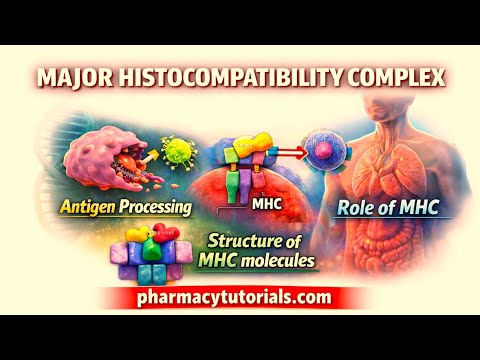
MHC and MHC Molecules
MHC (Major Histocompatibility Complex):
are a group of genes that code for cell-surface Proteins, and these cell-surface Proteins are responsible for binding with antigen and presenting that antigenic peptides to T-lymphocytes. They play a central role in immune recognition, helping the immune system distinguish self from non-self. MHC molecules: These are the proteins, which are produced by MHC genes. They bind with antigen peptides, and expressed or take them on the cell surface. Further these antigen-MHC molecule complex, present the bound antigenic peptide to T cells.The MHC participates in the development of both humoral and cell mediated immune responses. The MHC is referred to as the HLA complex in humans and as the H-2 complex in mice.

Classes of MHC Molecules
MHC genes encode three classes of molecules:
- Class I MHC: Class I MHC genes encode glycoproteins expressed on the surface of nearly all nucleated cells; the major function of the class I gene products (MHC I molecule) is to present the peptide antigens to Tc cells (Cytotoxic T cells).
- Class II MHC: Class II MHC genes encode glycoproteins expressed primarily on antigen-presenting cells (macrophages, dendritic cells, and B cells), where they present processed antigenic peptides to TH cells (Helper T cells).
- Class III MHC: Class III MHC genes encode, in addition to other products, various secreted proteins that have immune functions, including components of the complement system and molecules involved in inflammation.

Antigen Processing Pathways
(a) Exogenous Antigens: The Endocytic Pathway for Antigen Processing
- Exogenous antigens are internalized by endocytosis.
- Internalized antigen moves to lysosomes.
- Antigen protein degraded in small fragments by the action of lysosomal enzymes
- Then these fragmented antigenic proteins binds with class II MHC molecules to form a complex.
- Then this complex, moves towards the cell surface and appear at the cell surface in the form of peptide–class II MHC complexes.
- This APC (having MHC II –Antigen complex), present the antigen to TH cells (Helper T cells).

(b) Endogenous Antigen – Cytosolic Pathway
- Cell gets infected by virus or bacteria.
- Microbial cells releases their proteins (endogenous antigen) in infected cells.
- Endogenous antigens are degraded into small fragmented peptides within the cytosol by Proteasomes.
- Fragmented antigenic peptides then assemble with class I molecules in the RER (Rough Endoplasmic reticulum).
- Fragmented antigenic peptides then assemble with class I molecules in the RER to form class I MHC – antigen complex.
- Then this complex, moves towards the cell surface and appear at the cell surface in the form of peptide–class I MHC complexes.
- This APC (having MHC I –Antigen complex), present the antigen to Tc cells (Cytotoxic T cells).

Structure MHC Molecule
Class I and Class II MHC molecules are membrane-bound glycoproteins that are similar in their structure and function. Scientists have successfully isolated and purified these molecules, and their three-dimensional structures have been studied using X-ray crystallography.
Structure of Class I MHC molecule
Class I MHC molecules contain a 45-kilodalton (kDa) α chain associated noncovalently with a 12-kDa β2-microglobulin molecule. The α chain is a transmembrane glycoprotein chain. The α chain is anchored in the plasma membrane by its hydrophobic transmembrane segment and hydrophilic cytoplasmic tail. The function of cytoplasmic anchor segment is to anchor the MHC II molecule in the cell membrane and the function of cytoplasmic tail is to participate in intracellular trafficking and signalling. the α chain of class I MHC molecules is organized into three external domains; (α 1, α 2, and α 3), each containing approximately 90 amino acids; a transmembrane domain of about 25 hydrophobic amino acids and a cytoplasmic anchor segment of 30 amino acids. The β2-microglobulin is similar in size and organization, having similar 3-D folding pattern to the α3 domain and having approximate 100 amino acids; it does not contain a transmembrane region and is noncovalently bound to the class I glycoprotein. This peptide-binding cleft is located on the top surface of the class I MHC molecule, and it is large enough to bind a peptide of 8–10 amino acids.
Structure of Class II MHC Molecule
The MHC class II (MHC II) molecule is a heterodimeric glycoprotein expressed mainly on professional antigen-presenting cells such as dendritic cells, macrophages, and B lymphocytes.
MHC II molecule consists of two non-covalently associated transmembrane chains, an α-chain and a β-chain, with an overall molecular weight of approximately 55–60 kDa (α chain ≈ 33 kDa and β chain ≈ 28 kDa). Each chain contains two extracellular domains (α1 and α2 on the α chain; β1 and β2 on the β chain), and each domain is composed of about 90 amino acids. Both α and β chains possess a hydrophobic transmembrane segment of about 20–25 amino acids, followed by a short cytoplasmic tail of approximately 10–15 amino acids involved in intracellular trafficking. The peptide-binding groove of MHC II is formed by the α1 and β1 domains, while the α2 and β2 domains provide structural support and interaction sites for CD4⁺ T helper cells.
Comparative Study of MHC I and MHC II
| Feature | MHC I | MHC II |
|---|---|---|
| Molecular Weight | 56–57 kDa | 55–60 kDa |
| Domains | α1, α2, α3 + β2 | α1, α2, β1, β2 |
| Peptide Length | 8–10 amino acids | 13–18 amino acids |
| Antigen Binding Domain | α1, α2 | α1, β1 | Present the Antigen to | CD8 Tc Cell (Cytotoxic T cells) | CD4 TH Cells (Helper T Cells |
